Tuesday Jon and Charlotte drove up to spend the day with us. We took the kids on a walk on the Greenbelt along the river. We make quite a group with 5 adults, 7 kids, a dog, a bike, scooter, stroller, and unicycle. I thank Jon's family for spending his day off with us. I never get tired of spending time with the kids.
Thursday, October 13, 2011
Idaho Council of Teachers of Mathematics
October 5, I flew to Idaho to attend the ICTM conference in Idaho Falls. I rented a car in Boise and then drove to Idaho Falls. My surprise was when the economy car I ordered turned out to be a new Ford Mustang. It has really been fun driving this week.
Notice the snow. While I was in Idaho Falls, they had their first snow fall of the year. It snowed about 5 inches before the day was through. I stayed at my cousin Sharon's house and she fixed a great dinner for me and her daughter, Merrelee's family. I had such a nice evening laughing and telling stories with them.
While at the math conference, I had the opportunity to present a workshop for teachers. It is a great hands-on lesson on functions that students really enjoy using string and water.
Sunday, October 2, 2011
Green Bank Radio Telescope Observatory
Saturday morning Geraldine and I drove to Green Bank, West Virginia to meet other Einstein Fellows at the site of the largest radio telescope in the U.S. We gone on the same field trip the previous year. It was a great retreat and an opportunity to get away from work and the city. It is a "quiet zone" and we had no cell phones, computers, and limited digital camera use. It is about a 5 hour drive from my apartment.
This is the largest radio telescope in North America. It is more than 400 feet high. The area of the disk is about 2 1/2 acres. They also have many other smaller and older telescopes. There are about 70 total. The observatory is financed by the National Science Foundation.
It was a relaxing weekend with fresh, crisp air. We stayed in a dorm-like rooms with a shared kitchen and lounging area. In the evening we played Scrabble and Uno. West Virginia is beautiful. We were right in the middle of the Shenandoah Mountains.
This is the largest radio telescope in North America. It is more than 400 feet high. The area of the disk is about 2 1/2 acres. They also have many other smaller and older telescopes. There are about 70 total. The observatory is financed by the National Science Foundation.
It was a relaxing weekend with fresh, crisp air. We stayed in a dorm-like rooms with a shared kitchen and lounging area. In the evening we played Scrabble and Uno. West Virginia is beautiful. We were right in the middle of the Shenandoah Mountains.
Friday, September 30, 2011
Solar Energy Workshop
I was able to participate is a great Solar Energy Workshop for Teachers put on by the National Energy Education Development (NEED) Project. We learned about energy in general and solar energy in particular. Some of the things we learn are in this short quiz.
1. What is the nuclear reaction that takes place inside the sun's core?
a. Fusion
b. Activation
c. Fission
d. None of these.
2. Which sector or the U.S. economy consumes the most petroleum.
a. Residential
b. Commercial
c. Industrial
d. Transportation
3. Renewable energy sources provide what percentage of totalU.S. energy consumption?
a. 1%
b. 5-10%
c. 15-20%
d. 25-30%
4. Nearly half of U.S. electricity is produced by which energy source?
a. Hydropower
b. Coal
c. Uranium
d. Wind
1. What is the nuclear reaction that takes place inside the sun's core?
a. Fusion
b. Activation
c. Fission
d. None of these.
2. Which sector or the U.S. economy consumes the most petroleum.
a. Residential
b. Commercial
c. Industrial
d. Transportation
3. Renewable energy sources provide what percentage of totalU.S. energy consumption?
a. 1%
b. 5-10%
c. 15-20%
d. 25-30%
4. Nearly half of U.S. electricity is produced by which energy source?
a. Hydropower
b. Coal
c. Uranium
d. Wind
We spent most of the day playing with Energy and Solar Energy Kits. We each got to take a kit home and they are mailing us a $100 stipend. It was a win-win day.
Learning was hands-on as we asked questions and carried out experiments. This is fun learning that turns kids on to science.
Answers to quiz: 1. a, 2. d, 3. b, 4. b.
Wednesday, September 28, 2011
Opera in the Outfield
Once a year, DC has Opera in the Outfield. It is held in the National Baseball Stadium. The opera is streamed live from the Kennedy Center. People come and sit on blankets in the outfield or in the stadium seats. The opera was free, but the one slice of cheese pizza and a drink cost me $10!
I forgot my camera, so this is taken with my phone camera. The opera was a real tragedy. Everyone was crazy in love with someone and everyone died in the end.
Library of Congress
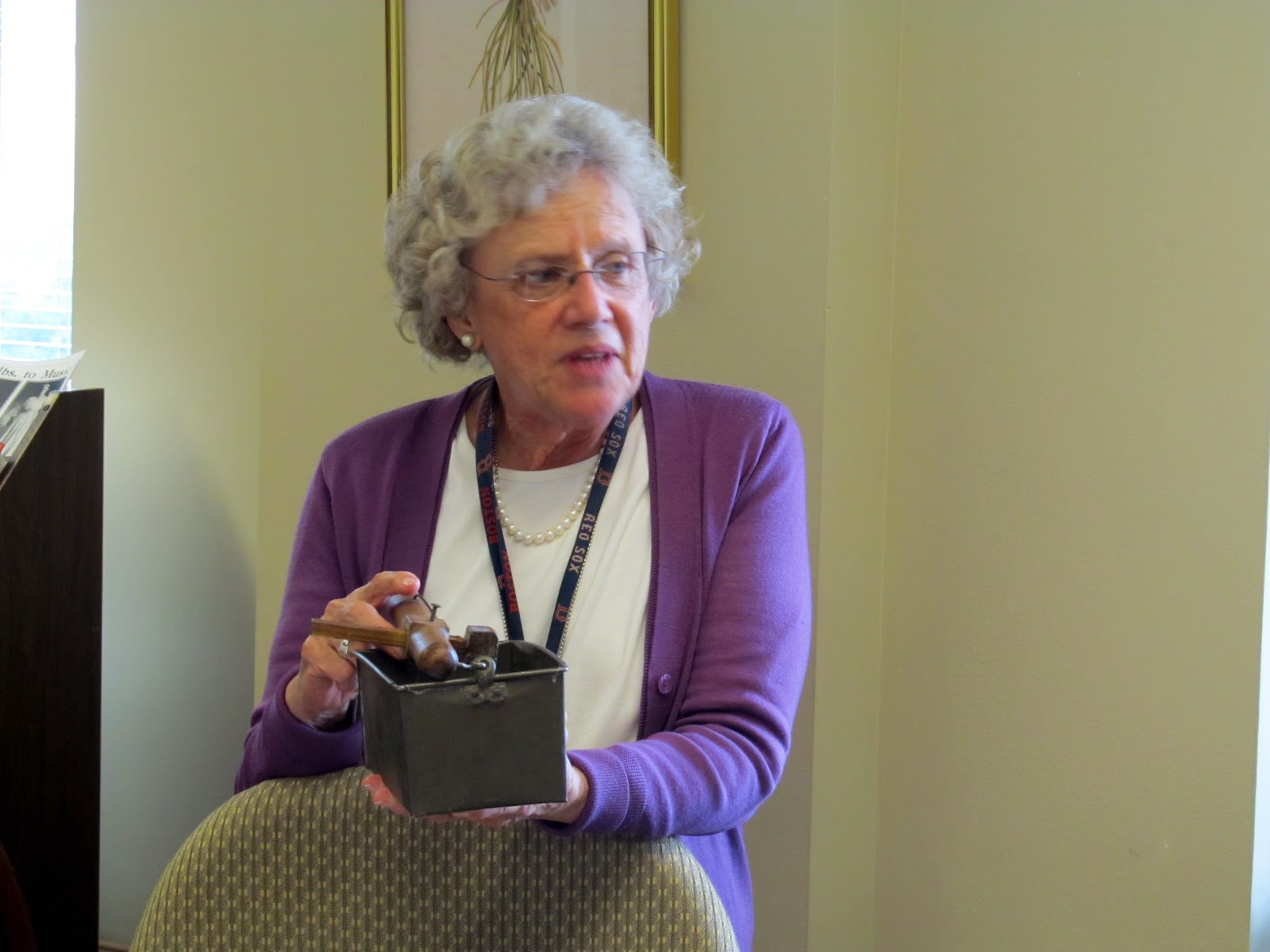
One field trip the Einstein Fellows take each year is to the National Library of Congress. The star of the day is Constance Carter. She has worked at the Library for nearly 50 years. She is is full of great stories which she tells with lots of energy and humor. She recently created a publication called Food Thrift: Scraps from the Past. As part of her research she learned to parch corn and how to make hog's head cheese.
Tuesday, September 27, 2011
STEM Smart: Lessons Learned From Successful Schools
On September 19, 2011 I traveled to Philadelphia to attend the STEM Smart: Lessons Learned From Successful Schools event hosted by NSF at Drexel University. It was about two hours on Amtrak train.
School Conditions that Support Learning
1. school leadership as a driver of change
2. professional capacity of faculty
3. parent - community ties
4. student centered
Recommendations
1. consider all models of STEM
2. devote adequate time
3. curriculum that is focused, rigorous, and sequenced
4. provide teachers with learning opportunities
5. teacher led professional development
Policy Makers
1. elevate science to same level as reading and math
2. develop science assessments
3. supports for STEM teachers
4. more educational research with continual funding
The event was surrounding the release of a report by National Research Council on Successful Schools. They didn't really tell anything new.
Essentials to Effective Instruction
1. coherent set of standards and curriculum
2. teachers with high capacity to teach the disciplines
3. supportive system of assessment and accountability
4. adequate instructional time
5. equal access to high quality learning opportunities
1. school leadership as a driver of change
2. professional capacity of faculty
3. parent - community ties
4. student centered
Recommendations
1. consider all models of STEM
2. devote adequate time
3. curriculum that is focused, rigorous, and sequenced
4. provide teachers with learning opportunities
5. teacher led professional development
Policy Makers
1. elevate science to same level as reading and math
2. develop science assessments
3. supports for STEM teachers
4. more educational research with continual funding
Dr. Suresh, Director of National Science Foundation gave an opening address. He started with good news about education in the U.S. We are leaders in science and technology around the world. Our universities are world leaders. We lead in research and scholarly publications. But then he related this short excerpt from Tom Friedman's new book, That Used to be Us. Grinnell College in Iowa has 10% of its applicant pool come from China. Half of those Chinese applicants have perfect SAT scores in mathematics.
Subscribe to:
Posts (Atom)